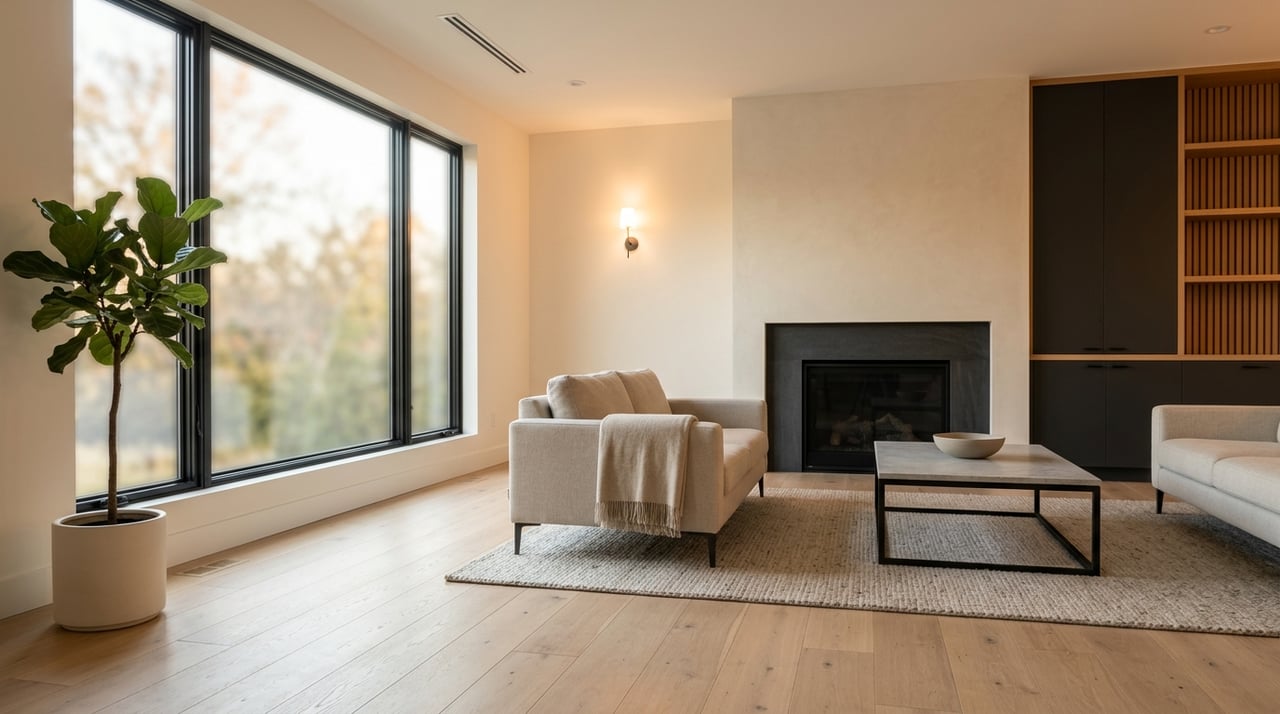
If you are selling a luxury home in Newton, you are not just putting a property on the market. You are positioning a high-value asset in one of Greater Boston’s most closely watched seven-figure markets. That can feel exciting, but it also raises the stakes around pricing, presentation, timing, and privacy. The good news is that with the right strategy, you can make smart decisions from day one and launch with confidence. Let’s dive in.
Understand Newton’s luxury market
Newton is a village-based market about seven miles from downtown Boston, with 13 distinct villages and access to both the MBTA commuter rail and Green Line. According to the City of Newton’s official materials, the city also includes 15 elementary schools, 4 middle schools, and 2 high schools, which helps explain why the market draws consistent demand from a wide range of buyers.
Luxury in Newton is not one single price point. Based on the city’s 2024 sales data and Redfin’s luxury definition as the top 5% of a metro area’s price range, a practical shorthand is that homes around $2 million and up often sit in the entry-luxury tier, while $3 million and up is a clearer upper-luxury category.
The official numbers show why. In Newton’s FY2026 classification hearing, the 2024 median single-family sale price was $1.75 million, the median condo sale price was $1.121 million, and the rolling 10-year single-family median had reached $1.85 million through September 2025 according to Newton’s municipal report.
Price by village, not by city average
One of the biggest mistakes luxury sellers can make is relying too heavily on a citywide median. In Newton, village-level pricing can vary dramatically, which means your home should be evaluated against the most relevant nearby luxury comps.
According to the City of Newton’s 2025 sales analysis, 2024 median single-family sale prices were about $3.1 million in Chestnut Hill, $2.6385 million in West Newton Hill, $2.475 million in Old Oak Hill, $2.1 million in Waban, and $2.099 million in Newton Centre. By contrast, areas such as Nonantum and Upper Falls were much lower, at roughly $1.04 million and $1.014 million.
That spread matters. A luxury home in Chestnut Hill should not be priced the same way as a similar-size home in another village with a different buyer pool, lot profile, or recent sales pattern. In a market like Newton, pricing precision is part of marketing.
Set expectations with current market signals
Public market trackers differ in methodology, but the overall message is consistent. Newton remains a high-value market, and buyers still respond to well-positioned homes.
For example, Redfin’s Newton housing market data reported a February 2026 median sale price of $1.525 million and 59 days on market, while Realtor.com’s Newton overview reported a $1.8385 million median listing price, 172 homes for sale, and a 98% sale-to-list ratio, describing Newton as a balanced market in February 2026.
For you as a seller, the takeaway is simple. Buyers may pay close to asking when a home is priced and presented well, but they are not likely to overlook an overly ambitious list price. In other words, the market can reward discipline, not guesswork.
Use your equity wisely
Many Newton homeowners are entering the market with strong built-in equity. The city’s official long-term data show the median single-family sale price rising from $1.07 million in 2016 to $1.85 million through September 2025, based on Newton’s municipal sales report.
That appreciation gives you options. You may have room to invest in strategic updates, pre-sale preparation, and a stronger launch without compromising your overall return. It also means you should make decisions based on today’s market and your home’s exact position within it, not only on what your property was worth several years ago.
Prepare for scrutiny before you list
Luxury buyers tend to look closely, and they should. The higher the price point, the more important it becomes to understand your home’s condition before it goes live.
According to the National Association of Realtors’ consumer guide to preparing to sell, a pre-sale inspection is optional, but it can help uncover issues involving the roof, plumbing, electrical systems, HVAC, insulation, fireplaces, and health-related concerns such as mold, radon, lead paint, and asbestos.
Even if you choose not to complete every repair, knowing what may come up gives you more control. It can help you decide what to address, what to disclose, and how to price with fewer surprises. It is also smart to gather manuals and warranties for systems and appliances that will remain with the home.
Stage for how buyers actually shop
Luxury marketing starts well before the first in-person showing. In many cases, the first showing happens online, and buyers decide whether to book a visit based on how clearly the home is presented.
That is why staging still matters. In NAR’s 2025 staging snapshot, 83% of buyers’ agents said staging made it easier for buyers to visualize a property as their future home. The same research found that 29% of sellers’ agents said staging increased the dollar value offered by 1% to 10%.
The most common pre-listing recommendations were:
- Decluttering
- Cleaning the entire home
- Improving curb appeal
Those basics go a long way in Newton’s luxury market, where buyers often compare your home against polished, well-prepared listings in the same village.
Focus on the rooms that matter most
Not every room needs the same level of attention. NAR’s staging research found that the living room, primary bedroom, dining room, and kitchen are the spaces most often staged, and that tracks with how buyers evaluate value and flow.
These spaces often shape the emotional response to a home. If your layout, finishes, natural light, and scale are among your strongest selling points, those details should come through immediately in person and online.
Treat media as part of the strategy
Staging should not stand alone. It works best as part of a full visual package that includes photography, floor plans, and video.
According to NAR’s 2025 buyer and seller research, internet users rated photos (81%), detailed property information (77%), floor plans (57%), and virtual tours (38%) as very useful. That means a luxury launch should do more than upload basic images to the MLS.
For high-end Newton homes, a strong digital presentation helps buyers understand scale, layout, finishes, and overall lifestyle before they ever step inside. When your home enters the market looking fully prepared, it creates momentum and sets the tone for every showing that follows.
Aim for spring if timing is flexible
If you have flexibility, spring is often the strongest seasonal window for a Newton luxury listing. Realtor.com’s 2025 timing analysis found that the week of April 13 through 19 historically offered favorable conditions for sellers nationwide, including 17.7% more views per listing, homes selling 9 days faster than a typical week, and 13.2% fewer sellers competing on the market.
That broader pattern lines up with Redfin’s luxury report, which notes that luxury homes typically sell fastest in late spring and early summer and slowest in winter.
Of course, timing is never only about the calendar. Your personal schedule, the home’s readiness, and the local competition in your village also matter. Still, if your goal is to align with seasonal buyer activity, spring is the clearest target.
Decide how much exposure you want
Not every luxury seller wants maximum public exposure right away. Some prefer more control over privacy, especially if they are balancing family schedules, relocation plans, or a quieter selling process.
That can be a valid strategy, but it comes with tradeoffs. According to NAR’s 2025 MLS policy update, sellers may have options such as delayed marketing exempt listings and office exclusive listings. However, sellers must acknowledge that they are waiving some benefits of immediate public marketing, and NAR states that MLS and public exposure still provide the largest pool of prospective buyers.
In practical terms, privacy should be a deliberate choice, not the default. If discretion is important to you, your marketing plan should weigh control and comfort against broad reach and buyer competition.
Build a Newton-specific luxury plan
A successful luxury sale in Newton usually comes down to three core decisions.
First, price by village, not by citywide averages. Second, prepare as though the home will be closely inspected, because buyers at this level tend to be careful and informed. Third, launch with a polished presentation, especially if you are targeting the spring market.
That is where white-glove representation can make a real difference. A tailored plan can help you balance valuation, preparation, digital marketing, timing, and privacy in a way that fits your goals instead of forcing a one-size-fits-all process.
If you are thinking about selling a luxury home in Newton, working with a high-touch advisor can help you move with more clarity from the very beginning. When you are ready for a tailored pricing and marketing strategy, connect with Orit Aviv for personalized guidance.
FAQs
What price range counts as luxury in Newton, MA?
- In Newton, a practical shorthand is that homes around $2 million and up often fall into an entry-luxury tier, while $3 million and up is a clearer upper-luxury segment, based on local sales patterns and Redfin’s metro-based luxury definition.
Why does village-specific pricing matter when selling a luxury home in Newton?
- Village-specific pricing matters because Newton’s 13 villages can have very different median sale prices, so the most accurate list price usually comes from nearby comparable sales within your home’s immediate village or submarket.
Should you get a pre-sale inspection before listing a luxury home in Newton?
- A pre-sale inspection is optional, but it can help identify issues with major systems and other conditions before your home hits the market, giving you more control over repairs, disclosures, and pricing.
When is the best time to sell a luxury home in Newton, MA?
- If your timing is flexible, spring is often the strongest window, with late spring and early summer generally performing well for luxury homes and mid-April showing especially favorable historical conditions for sellers.
Is staging worth it for a Newton luxury listing?
- Yes, staging can be worthwhile because it helps buyers visualize the home, supports stronger photography and marketing, and may improve perceived value when paired with a polished launch.
Can you sell a luxury home in Newton privately?
- Yes, privacy-focused options may be available, but they typically reduce public exposure, so they should be used strategically after weighing the benefits of discretion against access to the widest buyer pool.
