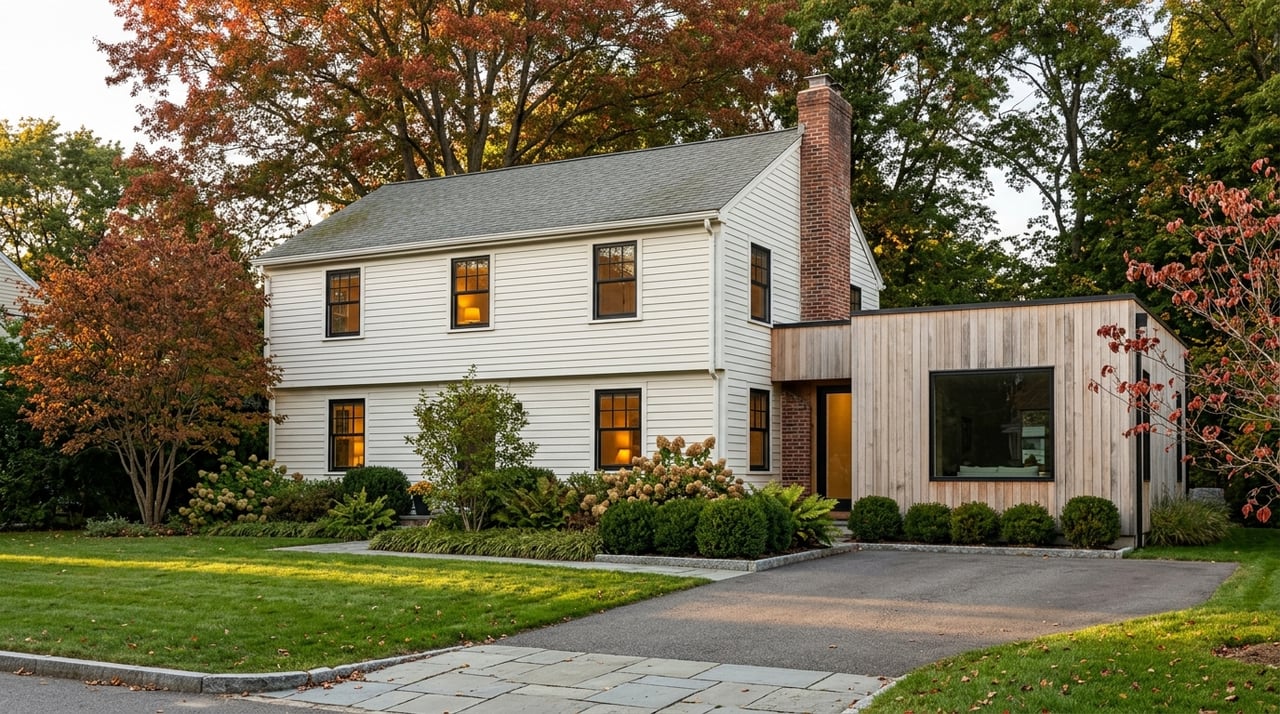
If you are trying to make sense of the Needham housing market, you are not alone. At first glance, it can look like a simple high-demand suburb, but the real story is more nuanced. When you understand how supply, housing types, commuter access, and long-term ownership patterns shape Needham, you can make smarter buying or selling decisions. Let’s dive in.
Needham Is a Tight, Stable Market
Needham behaves more like a mature, supply-constrained suburban market than a fast-changing one. Regional planning data classifies Needham as a mature suburban town, and local housing data points to a strong owner-occupant base with limited turnover.
That matters because low turnover usually means fewer opportunities come to market at any given time. Recent Census data show that more than 83% of homes are owner-occupied, and 92.0% of residents were living in the same house one year earlier. For you as a buyer or seller, that helps explain why inventory can feel intermittent rather than consistently available.
The Town of Needham’s housing plan also describes very tight vacancy conditions. In 2020, estimated homeowner vacancy was 1.0% and rental vacancy was 2.3%, both of which the plan identifies as extremely tight.
Commuter Access Supports Demand
Needham’s location continues to support steady housing demand. The town has four MBTA Commuter Rail stops with regular service to South Station, along with Route 59 bus access.
For many buyers, that commuter convenience adds to Needham’s appeal. Census QuickFacts also report an average commute time of 27.7 minutes, which helps explain why the market tends to attract professionals looking for suburban housing with access to Boston.
Needham Housing Stock Is Mostly Single-Family
If you browse listings in Needham, you will quickly notice a clear pattern: single-family homes dominate the market. According to the town’s housing plan, detached and one-unit attached homes make up about 82% of all housing units, with detached homes alone accounting for 77.6% of the 2020 structure count.
The ownership side of the market is even more concentrated. About 95% of owner units are in detached or attached single-family forms, while renters are more concentrated in buildings with 10 or more units.
This is one reason buyers looking for condos, townhomes, or smaller multifamily options may feel they have fewer choices. Needham does have a mix of housing, but it is still built primarily around single-family living.
Homes Tend to Be Large
Needham’s housing stock also skews larger than many nearby markets. The town reports that 65.7% of housing units had seven or more rooms in 2020, and 35.9% had nine or more rooms.
That size profile is not accidental. The housing plan notes that smaller homes have often been demolished and replaced with much larger homes, which has shifted the overall housing mix over time.
For buyers, this means many homes are competing on more than square footage alone. Lot quality, location, and the potential to update, expand, or right-size can all influence value.
Why Inventory Can Feel Scarce
Needham’s market is shaped by structural scarcity more than short-term swings. A high owner-occupancy rate, limited vacancy, and strong household stability all reduce the number of homes that naturally come up for sale.
That can create a market where well-positioned listings get a lot of attention. If a home is move-in ready, well-located, or offers the kind of layout many buyers want, it may stand out quickly because there are simply not that many comparable options available at once.
For sellers, that can support pricing power when the home aligns with current demand. For buyers, it reinforces the importance of being prepared and evaluating each listing carefully when it hits the market.
Buyer Demand Comes From Several Groups
Needham’s buyer pool is not one-size-fits-all, but a few demand patterns stand out clearly. Local data points to a market shaped by larger households, commuters, and homeowners looking for a long-term fit.
Census data show that 27.5% of residents are under 18, while the town’s housing plan says 81.0% of households are family households. The plan also reports that owner-occupied households average 3.03 persons.
That helps explain why homes with practical living space, flexible layouts, and strong everyday functionality often resonate with buyers. It also supports Needham’s reputation as a market where many households are planning for stability rather than a short stay.
Another demand group includes downsizers and empty nesters. The town’s housing plan notes that many long-term homeowners are over-housed but face limited downsizing options within Needham, especially because new condominium development has been limited.
Single-Family Homes Set the Tone
Single-family homes remain the benchmark property type in Needham. The town’s housing plan says median single-family values rose steadily after the early 1990s and reached about $1.29 million in 2021.
Because some newer supply comes from teardown-and-rebuild activity rather than new land creation, pricing is often tied closely to lot value, location, and access. In practical terms, that means two homes with similar room counts may perform differently if one offers a more desirable setting or future potential.
For sellers, this is why accurate positioning matters. For buyers, it is a reminder that the value of a Needham home often reflects both the structure and the land beneath it.
Condos Play a Different Role
Needham’s condo market works differently from its single-family market. The town’s housing plan says condominium markets are generally slower to appreciate and faster to decline than single-family homes, though condo values can rise when single-family prices get unusually high.
That makes condos an important segment to watch, especially for buyers who want a lower-maintenance option or a different price point. At the same time, Needham condos are not all the same. The local stock includes older, more affordable units as well as newer or more premium options that track the upper end of the market.
If you are comparing condos in Needham, it helps to look closely at age, condition, location, and how the unit fits into the broader local market. This is not a one-size-fits-all category.
Two- and Three-Family Homes Are Hard to Find
Small multifamily properties occupy a special niche in Needham. The housing plan shows that two-family stock has declined over time, and many of these properties have been converted to single-family use.
That matters because two-family homes can appeal to both owner-occupants and investors. The town notes that these homes are often among the most affordable private-market options because they can combine owner occupancy with rental income.
The challenge is supply. When inventory is already thin and the number of these properties has been shrinking, replacements are hard to find once a listing sells.
The Housing Mix Is Slowly Changing
Even though Needham remains dominated by single-family homes, the housing mix is slowly evolving. The town reports that 666 units were added in multifamily buildings of three units or more between 2010 and 2020.
At the same time, two- to four-unit properties declined by 135 units during that decade. So while multifamily inventory has grown in some areas, the market has not seen a broad expansion of smaller middle-market housing types.
This helps explain why some buyers still struggle to find right-sized options. It also suggests that future inventory growth may be more concentrated in transit-adjacent or commercial areas as the town continues to revise zoning under the MBTA Communities framework.
What This Means If You Are Buying
If you are buying in Needham, it helps to view the market through a long-term lens. You are entering a town with limited turnover, tight vacancy, and a housing stock that strongly favors single-family homes.
That means preparation matters. You may need to move quickly when a well-matched property becomes available, but you also want to stay disciplined about location, lot, layout, and future fit.
A few questions can help guide your search:
- Do you want a move-in-ready home or a property with update potential?
- Are you focused on single-family living, or would a condo better match your lifestyle?
- How important is commuter rail access to your day-to-day routine?
- Are you planning for a long-term hold, a future downsize, or flexibility over time?
What This Means If You Are Selling
If you are selling in Needham, the market’s structural tightness can work in your favor, but strategy still matters. Buyers are often paying close attention to condition, layout, location, and how a property compares with limited competing inventory.
That is why pricing, presentation, and marketing need to align. In a market where many homes are large and values are shaped by both the house and the lot, thoughtful positioning can make a meaningful difference.
For sellers, strong preparation often includes:
- Understanding how your home fits within Needham’s dominant property segments
- Evaluating whether buyers will see value in the home’s current condition or future potential
- Positioning the property around the features most relevant to today’s buyer pool
- Launching with polished, well-curated marketing that matches the home’s price point
The Bottom Line on Needham Trends
Needham’s housing market is best understood as a stable, high-demand suburban market shaped by limited supply, a large share of owner-occupied homes, and strong demand for single-family living. It is not simply about whether prices are up or down in a given moment. It is about how local housing structure, commuter access, and scarce inventory affect the choices available to you.
If you are buying, that means focusing on fit, timing, and preparation. If you are selling, it means understanding how your property fits into a market where well-positioned homes can stand out quickly.
When you have local context, the market becomes much easier to read and much easier to navigate with confidence. If you’re thinking about buying or selling in Needham or anywhere in Greater Boston, Orit Aviv offers the kind of tailored, high-touch guidance that helps you move with clarity.
FAQs
What makes the Needham housing market feel so competitive?
- Needham has high owner occupancy, low vacancy, and limited turnover, so there are often fewer homes available at one time.
Are single-family homes the main property type in Needham?
- Yes. The town’s housing plan says detached and one-unit attached homes make up about 82% of all housing units, with detached homes alone at 77.6%.
Are condos in Needham always the entry-level option?
- No. Needham condos range from older, more affordable units to newer and more premium homes, so pricing and performance can vary widely.
Why are two-family homes in Needham hard to find?
- The town reports that two-family stock has declined over time, and many such properties have been converted to single-family use.
How does commuter access affect Needham home demand?
- Needham has four MBTA Commuter Rail stops and Route 59 bus access, which supports demand from buyers who want suburban living with access to Boston.
