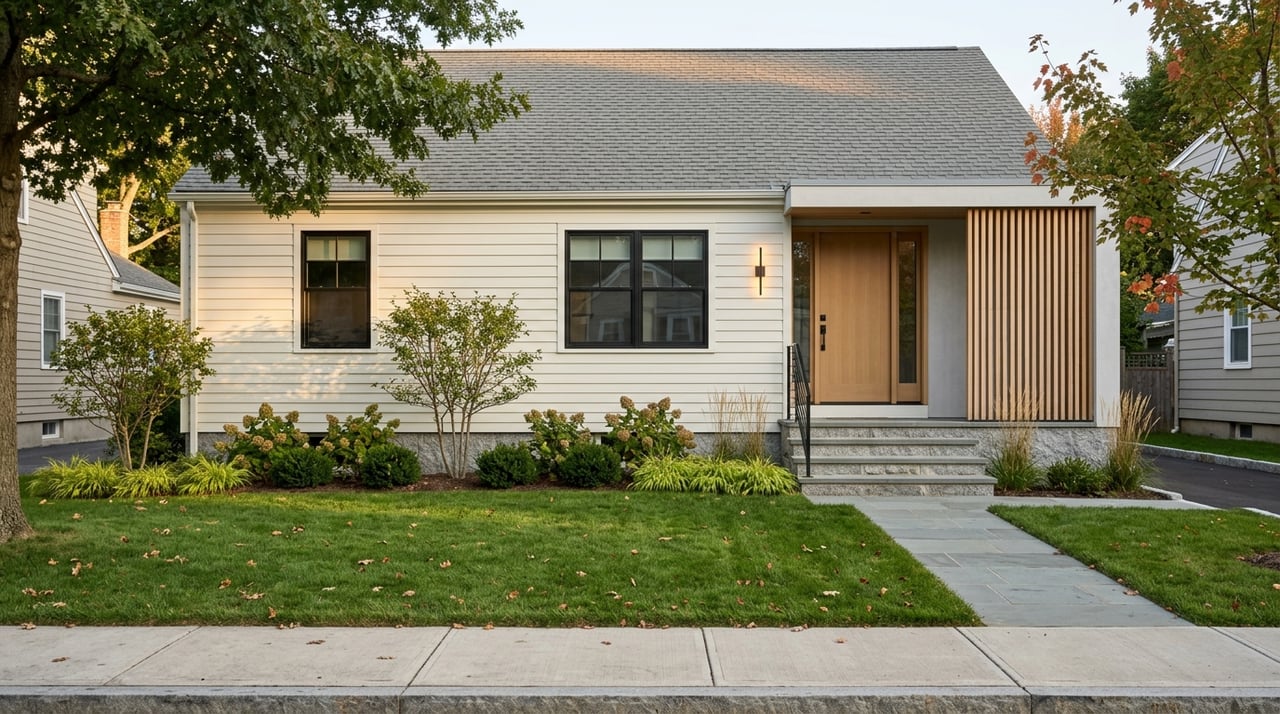
Curious what day-to-day life in Lexington, MA actually feels like? If you are considering a move, you probably want more than a map and a list of homes. You want to know how the town works, how people get around, where community life happens, and what kind of rhythm you can expect once the boxes are unpacked. This guide walks you through the daily life, outdoor access, housing character, and community feel that shape Lexington in real terms. Let’s dive in.
What daily life feels like in Lexington
Lexington has the feel of a town with strong routines and active public spaces. Census QuickFacts estimates about 34,648 residents as of July 1, 2025, with an 80.5% owner-occupied housing rate, a median household income of $238,444, and a mean commute time of 30.7 minutes. Those numbers help explain why the town often feels stable, busy, and highly engaged.
The age mix also shapes daily life in visible ways. About 25.5% of residents are under 18, while 21.7% are 65 and older. In practice, that creates a multi-generational rhythm, with school schedules, family programming, senior services, and community events all playing a meaningful role.
Another notable part of Lexington’s profile is education attainment. Census data estimates that 84.3% of adults age 25 and older hold a bachelor’s degree or higher. For buyers relocating from out of state or from abroad, that often translates into a community where civic participation, programming, and public resources are easy to notice in everyday life.
Lexington Center anchors community life
Lexington Center is more than a commercial district. The town’s Center Committee is charged with supporting the center’s historic significance, commercial diversity, social and cultural activity, aesthetics, traffic flow, and parking. That mission gives the area a civic role, not just a retail one.
In everyday terms, Lexington Center is where errands, casual meetups, and town traditions often overlap. It functions as a place where residents can move between shops, local services, historic landmarks, and public gathering spaces without feeling like they are in a purely transactional area. That blend is a big part of Lexington’s identity.
The Community Center adds another layer to that civic life. The town describes it as a centralized hub for community connections and transportation services, with meeting rooms, senior services, youth and family programming, fitness spaces, public Wi-Fi, and access to Lexpress and the MBTA. If you are trying to picture where community life happens beyond home and work, this is one of the key places.
Town traditions add a strong local identity
Some towns have events. Lexington has traditions that clearly help define local life. The farmers’ market program and annual Patriots’ Day celebration, including the parade and reenactment, are part of the town’s recurring rhythm.
That matters if you are looking for a place with a recognizable sense of community. These are not one-off attractions. They are part of how the town marks time, brings people together, and reinforces a shared local identity.
Schools are part of the everyday rhythm
Lexington Public Schools are a major part of how the town functions day to day. The district includes 11 public schools and serves about 7,000 students from preschool through grade 12. The town also notes a community education program with dozens of programs for children and adults.
Even if you are not moving specifically for schools, that infrastructure affects the overall pace and feel of town life. You will notice school-related schedules, events, and public activity as part of the weekly routine. In a town like Lexington, that presence is woven into the broader community fabric.
Neighborhood feel is more varied than many expect
One of the more interesting things about Lexington is that it does not read as one uniform place. Town area surveys identify locations such as the Central Business District, Battle Green, East Lexington, Concord Avenue, Six Moon Hill, Peacock Farm, and Five Fields. That helps explain why Lexington often feels like a collection of smaller pockets rather than one single center.
For a buyer, that is useful because the lifestyle experience can vary depending on where you land. Some areas feel more tied to the historic core, while others connect more strongly to neighborhood-scale clusters, modern residential enclaves, or specific commuting routes. The result is a town with more variety than people sometimes expect at first glance.
East Lexington has its own energy
East Lexington has seen town-led activation and beautification efforts, including a mural and public-art investment along Massachusetts Avenue and the Minuteman Bikeway business districts. That gives the area a distinct identity within the larger town.
If you are comparing different parts of Lexington, East Lexington is worth understanding on its own terms. It is not simply an extension of the center. It has its own commercial touchpoints and a slightly different day-to-day feel.
Getting around Lexington and beyond
Lexington offers a practical mix of car access, local buses, regional transit, and biking. The town says Lexington Center is accessible by car, Lexpress, MBTA 62 and 76, and the Minuteman Bikeway. For many households, that creates flexibility instead of forcing a one-mode routine.
Lexpress has served Lexington since 1979 and reaches places including Depot Square, Market Basket, Burlington Mall, Lahey Hospital, and Arlington Heights Busway. The MBTA 62 and 76 connect to Alewife and the Red Line. The town also notes that Routes 77 and 78 are relevant for East Lexington, while Route 61/350 can matter on the south and north edges.
Drivers also benefit from Lexington’s regional road access. The town connects Lexington to Route 2, I-95/128, Route 4/225, and Route 2A, and frames Lexington Center as about 10 minutes from Cambridge and 15 minutes from Boston by car. Commute times always depend on traffic and destination, but the road network is clearly part of Lexington’s appeal.
Parking is built into the center experience
For many suburban buyers, parking can make or break whether a town center feels convenient. Lexington specifically notes plenty of parking in and around the center, including lots behind shops, Depot Square, and NStar, along with some free on-street spaces and Town Hall parking.
That may sound like a small detail, but it matters in daily life. A center that is easy to access tends to become a more usable part of your weekly routine.
Outdoor living is a real part of daily routine
Lexington stands out for its outdoor network. The town says it manages more than 1,400 acres of conservation land, with 26 conservation areas and more than 50 miles of trails. Common uses include jogging, picnicking, birdwatching, cross-country skiing, and bicycling.
For many buyers, this is one of the strongest quality-of-life advantages in town. Outdoor access is not limited to a single park or one major reservation. It is woven across the community in a way that supports regular, repeat use.
There is also a strong volunteer culture behind that open-space system. Lexington’s Conservation Stewards program includes more than 230 volunteers who help build bridges and trails, control invasive species, clean waterways, and host conservation events. That says a lot about how invested residents are in maintaining shared spaces.
The Minuteman Bikeway shapes daily movement
The Minuteman Bikeway is one of Lexington’s signature amenities. The town says this 10-mile paved route runs from Bedford Center through Lexington Center to the Alewife MBTA station in Cambridge. It is level, typically plowed in winter, and connects riders to local landmarks, shops, and restaurants.
That makes it more than a recreational path. Depending on where you live, it can become part of your commuting pattern, exercise routine, or weekend plans. In many towns, bike access is an extra. In Lexington, it is part of how people actually move through the community.
Parker Meadow and parkland nearby
Parker Meadow is another good example of accessible green space close to the center. The town describes it as a 17-acre conservation parcel just outside Lexington Center, with access from the bikeway and a mix of forest, field, wetland, and a pond overlook.
Lexington also benefits from the presence of Minute Man National Historical Park across Lexington, Lincoln, and Concord. The National Park Service says the park covers roughly 1,038 acres, with grounds, trails, and parking areas open daily from sunrise to sunset and no fee to visit. The Battle Road Trail adds another major outdoor route that connects historic sites and open space.
Homes in Lexington offer more variety than you might expect
Lexington’s housing stock is one of the town’s more compelling strengths. The Historical Commission notes that late 19th- and early 20th-century housing still distinguishes Lexington, while modern enclaves such as Moon Hill, Five Fields, and Peacock Farm add to its architectural heritage. The town also says about 2,000 properties are protected through local historic districts.
For buyers, this means your search may include a wider range of styles than in many nearby towns. Lexington is not only about one classic suburban look. It offers layers of architectural history and design.
Historic homes near the core
Around Lexington Green and nearby historic areas, buyers may see colonial-era homes and early Federal forms. The town’s own examples include the Whittemore-Muzzey House from 1745 and the Hancock-Clarke House from 1737 to 1738.
In East Lexington, the town documents many 1830s and 1840s dwellings with Greek Revival and related Federal-to-Greek Revival details. If you are drawn to older homes with strong period character, Lexington has a meaningful supply of that architectural legacy.
Classic suburban styles and mid-century modern enclaves
As Lexington grew in the late 19th and early 20th centuries, the town added Shingle Style, Colonial Revival, and Craftsman houses, especially around the center and along Massachusetts Avenue. These styles remain part of the visual identity many buyers associate with established Greater Boston suburbs.
Lexington also has notable mid-century modern enclaves. Six Moon Hill, begun in 1947, is described by the town as its first modern, communally oriented neighborhood. Five Fields includes about sixty contemporary homes, and Peacock Farm was developed between 1952 and 1958 as a contemporary-style neighborhood.
For relocating buyers, that range can be especially appealing. You may be able to choose between an antique home, a classic early suburban property, or an architect-designed modern house within the same town search.
Who tends to love living in Lexington
Lexington often appeals to buyers who want a town with strong day-to-day structure and visible community investment. If you value civic life, public spaces, outdoor access, and a center that functions as a gathering place, Lexington checks many of those boxes.
It can also be a strong fit if you want flexibility in how you get around. Car access, local bus service, MBTA connections, and the bikeway all contribute to a lifestyle that can feel connected to both town life and the broader Boston area.
Finally, Lexington may stand out if housing style matters to you. The mix of historic homes, traditional suburban architecture, and mid-century modern enclaves gives buyers a broader design palette than many people expect.
If you are thinking about a move to Lexington, the most helpful next step is to match the town’s different pockets and housing types to your actual routine. The right fit often comes down to how you want to live every day, not just which home looks best online. If you want tailored guidance on Lexington and other Greater Boston communities, Orit Aviv offers a thoughtful, high-touch approach to buying, selling, and relocating.
FAQs
What is daily life like in Lexington, MA?
- Daily life in Lexington is shaped by school routines, active public spaces, Lexington Center, the Community Center, local traditions, and strong access to trails, conservation land, and the Minuteman Bikeway.
Does Lexington, MA have a walkable town center?
- Lexington Center functions as a true civic and commercial hub, with shops, services, public gathering spaces, and town-supported parking that make it a practical part of everyday life.
How do people commute from Lexington, MA?
- Residents use a mix of driving, Lexpress, MBTA bus routes including the 62 and 76 to Alewife, and biking via the Minuteman Bikeway, with road access to Route 2, I-95/128, Route 4/225, and Route 2A.
What kinds of homes are common in Lexington, MA?
- Buyers may find colonial-era homes, Federal and Greek Revival houses, Shingle Style, Colonial Revival, Craftsman homes, and mid-century modern properties in areas such as Six Moon Hill, Five Fields, and Peacock Farm.
Is Lexington, MA good for outdoor access?
- Lexington offers over 1,400 acres of conservation land, 26 conservation areas, more than 50 miles of trails, the Minuteman Bikeway, Parker Meadow, and access to Minute Man National Historical Park.
Does Lexington, MA feel like one downtown area?
- Not exactly. Lexington often feels like a collection of smaller areas and neighborhood pockets, including Lexington Center, East Lexington, Battle Green, Concord Avenue, Six Moon Hill, Peacock Farm, and Five Fields.
