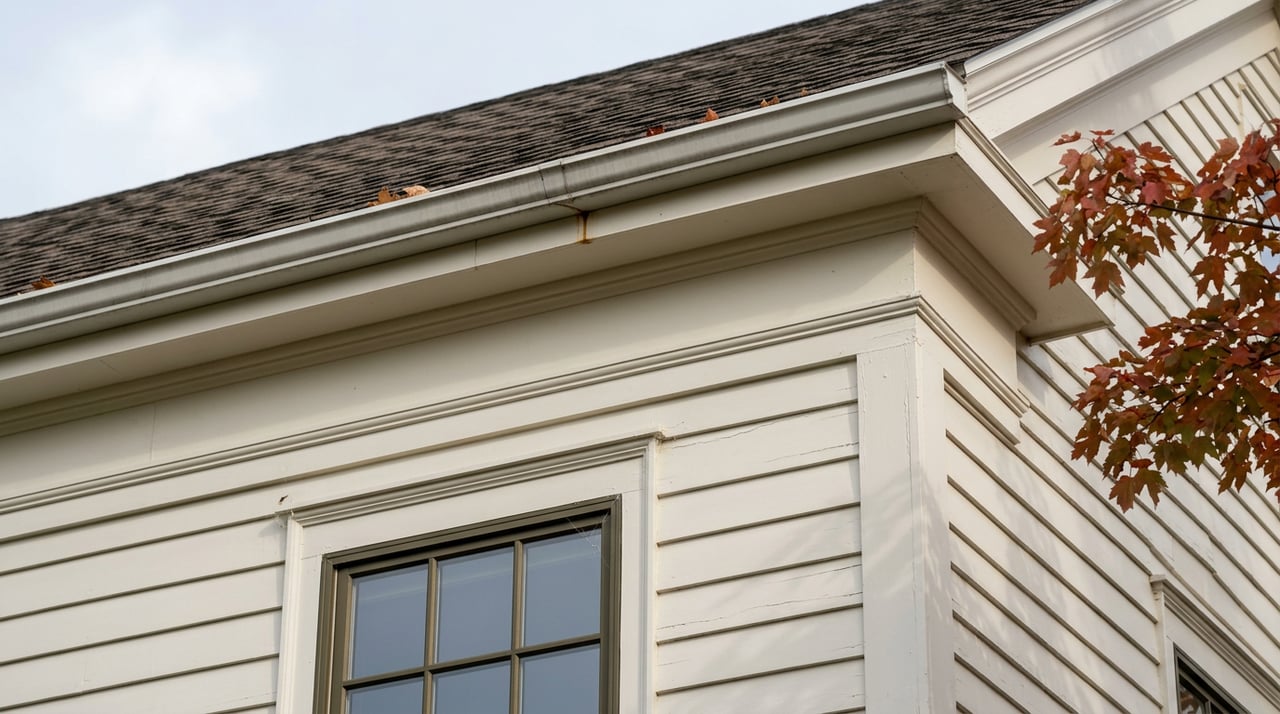
Say you close on a Colonial near the town center, inside what the listing called the Battle Green Historic District. You unpack, you settle in, and by October you want to repaint the shutters before the cold sets in. You call a painter, pick a color, and assume you're a weekend away from finishing.
You're not. Before that paint goes on, your project needs a hearing.
This isn't a hypothetical inconvenience dreamed up to sell a guide. Look at the town's own hearing docket from this year: an application for exterior changes at 1625 Massachusetts Avenue in March, another at 12 Waltham Street in April, one at 4 Percy Road in June, another at 1775 Massachusetts Avenue in August. Four separate homeowners, four separate months, all going through the same review before touching the outside of their own houses. That's not a backlog. That's the normal pace of business for Lexington's Historic Districts Commission, and it's a pace almost no buyer factors into their renovation timeline until they're already living with the house.
One Word, Two Different Regulators
Here's the part that trips people up: "historic" in Lexington doesn't point to one rule. It points to two entirely separate regulatory relationships, run by two different boards, triggered by two different conditions.
The first is geographic. If your address sits inside one of Lexington's four local historic districts, the Historic Districts Commission has final say over what you do to the outside of the building. The second is not geographic at all. It's based on whether your specific property appears on the town's Cultural Resources Survey, an inventory the Lexington Historical Commission has built since the 1970s that now documents more than 1,400 historic resources scattered across town, many of them well outside the four mapped districts. A buyer can walk away from a house in the Battle Green district and still land on a property that answers to the same kind of scrutiny, just administered by a different board with a different trigger.
Almost nobody explains this distinction before closing. Listings mention "historic district" as a selling point. They rarely mention which regulator comes with it.
The Historic Districts Commission: What It Actually Reviews
Lexington's four local historic districts, Battle Green, Munroe Tavern, Hancock-Clarke, and East Village, were established by a special act of the state legislature back in 1956. The commission that governs them has five full members and four associate members, all appointed by the Select Board, and its job is to approve or reject exterior architectural changes, including construction, demolition, renovation, color changes, and signage, on any building inside those boundaries.
The board is not a rubber stamp. It meets once a month, applications go through the town's OpenGov ViewPoint Cloud portal, and there's no application fee, which sounds generous until you realize the real cost is time, not money. If your project needs a second look, or the meeting gets continued, the town doesn't have to send out a fresh notice to abutters. That means it's on the homeowner, not the town, to track the status of their own case.
Past hearings on file with the commission show the range of what qualifies as an exterior change: a rebuilt porch, replaced shutters, a re-surfaced front path, a new roof, new signage for a storefront. Anything visible from a public way is fair game for review, while routine maintenance and true replacement in kind tend to be treated differently. The line between the two isn't always obvious until you've filed.
The Quieter Gate: Lexington's Demolition Delay Bylaw
The second regulator is easy to miss because it doesn't map to a neighborhood. The Lexington Historical Commission, a separate five-member board appointed by the Town Manager, administers the town's Demolition Delay Bylaw. Its job is to hold a public hearing on any proposed demolition of a property that's on the Cultural Resources Survey but sits outside all four local historic districts.
This is where the real surprise lives. A buyer can specifically choose a house outside Battle Green, Munroe Tavern, Hancock-Clarke, and East Village, thinking they've bought their way out of design review, and still own a property the town considers architecturally or historically significant enough to flag for a demolition hearing.
There's a third name that gets folded into this conversation and shouldn't be. The Lexington Historical Society, which runs the town's museum houses and the Lexington Depot Building, is a nonprofit with an educational mission. It has no regulatory power over what you do to your house. Only the Historic Districts Commission and the Historical Commission can actually stop, delay, or condition your project.
The two boards, side by side:
| Historic Districts Commission | Historical Commission | |
|---|---|---|
| Governs | 4 named districts (Battle Green, Munroe Tavern, Hancock-Clarke, East Village) | Properties on the Cultural Resources Survey, town-wide |
| Triggers on | Any exterior change visible from a public way | Proposed demolition of a surveyed property |
| Meets | Monthly | Third Wednesday of the month |
| Members | 5 full, 4 associate, appointed by Select Board | 5 full, 3 alternate, appointed by Town Manager |
| Application fee | None | None |
When Zoning Gets Involved Too
There's a third layer that surfaces on additions and larger projects. If your renovation also needs relief from the zoning bylaws, you'll be in front of the Zoning Board of Appeals as well as the Historic Districts Commission, and the town's own rules say approval from one board is contingent on approval from the other. In practice, that means two hearings can need to land in the same direction before a shovel goes in the ground, which stretches an already monthly cadence into something closer to a season.
Why the Timing Question Matters More Than It Did Last Year
For most of the past year, Lexington buyers didn't have room to ask these questions before writing an offer. As of March 2026, homes in Lexington were still drawing an average of eight offers and going pending in around 16 days, according to Redfin, with the median sale price near $1.7 million, up roughly 17.5 percent year over year. That's not a market that rewards a week spent researching a property's historic status before you bid.
But look one layer deeper into the same March 2026 data, reported separately by Houzeo, and the picture shifts. The share of Lexington homes selling above their asking price fell from about 82 percent a year earlier to roughly 44 percent, even as the overall sale-to-list ratio held above 101 percent. Homes are still selling fast and still selling for strong prices. They're just not triggering the all-out bidding wars they were a year ago. That gap between two March 2026 numbers, still-strong pricing power alongside a much lower rate of above-ask sales, is the opening. It means a buyer today has a little more room to ask what board a specific address answers to before they commit, instead of finding out after the ink dries.
The pace hasn't slowed to a crawl. Closings recorded by the Lexington Observer for the week of September 11, 2026, show sales ranging from $1,125,000 to $3,150,000 across the town, a reminder that demand at nearly every price point is still very much alive. The difference is that a buyer now has a realistic window, measured in days rather than hours, to ask the one question that actually protects a renovation budget: does this house sit inside one of the four historic districts, and separately, is it on the Cultural Resources Survey.
Before You Write an Offer (or List Your Home)
- Ask whether the address falls within Battle Green, Munroe Tavern, Hancock-Clarke, or East Village. If any portion of the structure sits inside a district boundary, the entire building is treated as being within it.
- Ask, separately, whether the property appears on the Cultural Resources Survey, even if it's nowhere near the four districts.
- If you're planning exterior work, budget at least one full monthly meeting cycle for Historic Districts Commission review, longer if a continuance is likely.
- If your project involves an addition or anything that touches setbacks, expect a parallel track through the Zoning Board of Appeals, with one approval often contingent on the other.
- Search the property's permit and hearing history through the town's OpenGov ViewPoint Cloud system before you assume a clean slate.
- If you're selling a home inside one of the four districts, having recent Historic Districts Commission approvals on file for any prior exterior work can remove a point of friction for a buyer doing this same homework.
Common Questions
Does historic district status affect anything inside the house? No. Both the Historic Districts Commission and the Historical Commission review exterior work and demolition. Interior renovations are handled through the standard building permit process.
Is there a fee to apply for a hearing? Neither board charges an application fee for a formal hearing.
What if my house isn't in one of the four districts? It can still appear on the Cultural Resources Survey, which puts it under the Historical Commission's Demolition Delay Bylaw if you ever propose tearing it down, even though no design review applies to routine renovation.
Can I get a building permit while a historic case is pending? Projects inside the four districts generally need Historic Districts Commission approval before other permitting can move forward, and where a Zoning Board of Appeals hearing is also required, the two approvals are typically contingent on each other.
Lexington's historic housing stock is one of the things that makes the town worth the price of admission, and none of this is a reason to avoid it. It's a reason to ask the right question at the right time, before an offer goes in rather than after a paint color gets picked. If you're weighing a purchase or a sale inside one of Lexington's historic districts, or you're just not sure which board your address answers to, Orit Aviv can help you find out before it becomes a surprise.
