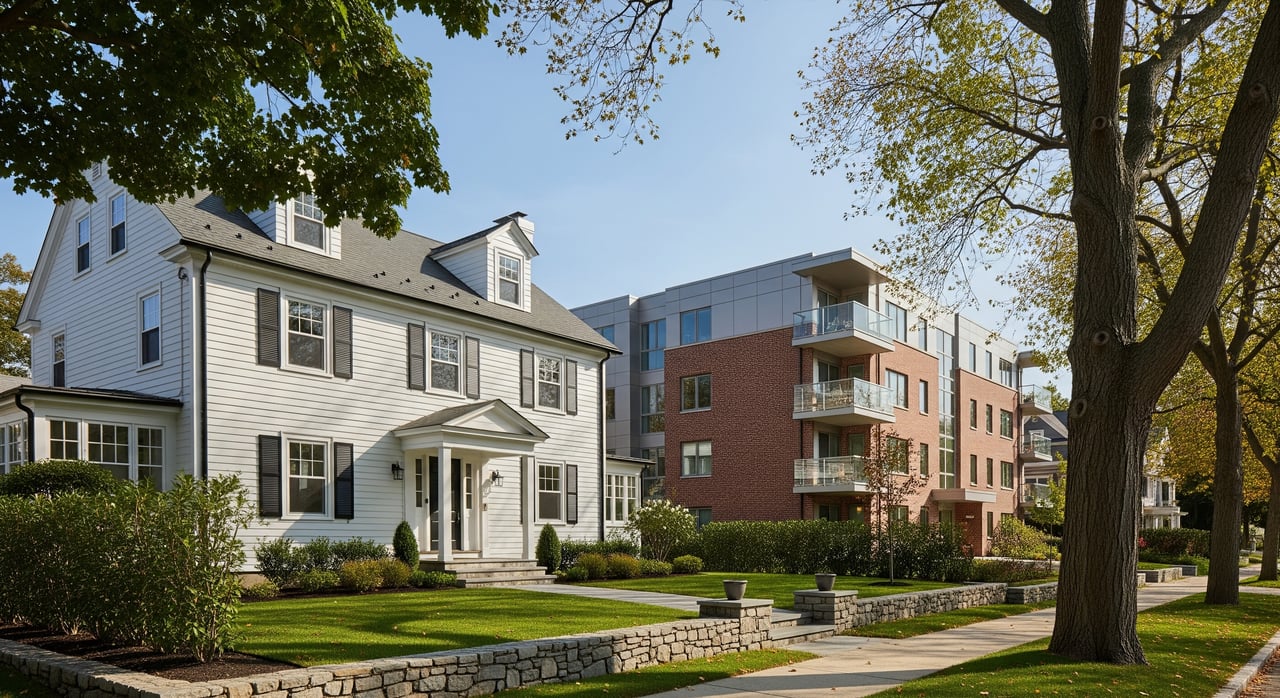
Trying to choose between a condo and a single-family home in Needham? You are not alone. With great commuter access, village centers, and strong local amenities, Needham offers both options, each with tradeoffs around cost, maintenance, and lifestyle. In this guide, you will learn how the two compare on monthly costs, HOA rules, upkeep, financing, and resale. You will also get a step-by-step decision framework and a simple worksheet you can use today. Let’s dive in.
Needham market context at a glance
Needham sits along I‑95/128 and Route 9 with MBTA commuter rail service on the Needham Line, plus multiple village centers that draw steady demand. Inventory and competition often shift with the seasons, with spring and early summer bringing more activity. Price bands matter: condos can offer a lower entry point in some cases, while single-family homes may be limited at the lower price ranges. If you want current numbers, ask your agent for a dated MLS snapshot so you can compare apples to apples.
Cost comparison: condo vs. single-family
Purchase and closing costs
Condos often provide a lower entry price than detached houses in many Boston suburbs, though it depends on location, size, and condition. Closing costs in Massachusetts are similar for both, including attorney, title, escrow, and recording fees. Some condo associations add transfer or move-in fees, so review disclosures early.
Property taxes
In Needham, annual taxes equal your property’s assessed value multiplied by the town tax rate. For a condo, the assessment applies to the individual unit. To estimate your taxes on any property, visit the Town of Needham’s resources and confirm current rates with the Town of Needham Assessors.
HOA or condo fees
Monthly condo fees typically cover common area maintenance, landscaping, master insurance, and sometimes water, sewer, or heat, plus snow removal and trash. Some communities include amenities like elevators, fitness rooms, or a pool. Fees vary widely based on services and building age. Always look for reserve contributions and recent projects to gauge fee stability.
Homeowners insurance
For a single-family home, you will likely carry an HO‑3 policy that covers the structure, personal property, liability, and additional living expenses. Condo owners carry an HO‑6 policy for interior finishes and personal property, while the association carries a master policy for the building and common areas. Confirm how the master policy handles coverage scope and deductibles, and whether deductibles can be assessed to unit owners.
Utilities and maintenance budgeting
House owners pay for all utilities and handle exterior care, including roof, siding, and yard. Condo fees may include water and some heating or gas, depending on the building. Regardless of property type, set aside a maintenance reserve. For single-family homes, many advisers suggest planning 1 to 3 percent of the home’s value each year, adjusted for age and condition. Condo owners should budget for interior systems and updates that are not covered by the association.
Capital replacements and special assessments
In a house, you plan and pay for big-ticket items like roof, HVAC, windows, and driveway on your own schedule. In a condo, the association plans these projects and pays from the reserve, but it can levy special assessments if reserves fall short. Review budgets, the reserve study, and recent meeting minutes to gauge what might be coming.
Lifestyle tradeoffs you will feel day to day
Privacy and space
Single-family homes offer more privacy, yard space, and often storage. Condos trade some privacy for convenience and shared amenities. Decide how important private outdoor space and a garage are for your daily life.
Autonomy and maintenance
With a house, you control timing and materials for repairs and upgrades. With a condo, you enjoy low-maintenance living, but you will follow community rules and project timelines. Consider your appetite for weekend projects versus turnkey convenience.
Amenities, rules, and community
Condo living can include conveniences like snow removal, landscaping, elevators, and a fitness room. At the same time, rules may limit pets, short-term rentals, or renovations. Always read the rules and regulations before you commit.
Parking and storage
House ownership often includes driveways and garages. Condo parking and storage vary by building, and guest parking can be limited near village centers. Confirm allocations, fees, and visitor policies.
Condo governance and due diligence
Documents to request and review
Ask for the Master Deed or Declaration, Bylaws, Trust Agreement, Rules and Regulations, current budget, recent financials, reserve study, and the last 12 to 24 months of meeting minutes. Review the master insurance certificate, deductible rules, owner occupancy ratio, any pending litigation, violations, or assessments. These reveal financial health, rule restrictions, and risk of future assessments.
Reserves and assessments
Healthy reserves reduce the chance of large, sudden fees. Ask for a 5 to 10 year capital plan or recent reserve study to understand major projects, timing, and funding.
Insurance and deductibles
Confirm whether the master policy is walls-in, bare-walls, or walls-out, and how deductibles are allocated after a claim. Clarify what is the unit owner’s responsibility for interior finishes and systems.
Legal framework in Massachusetts
Condominiums in Massachusetts are governed by the Massachusetts Condominium Act (Chapter 183A). Work with a real estate attorney to interpret these documents early in your offer process.
Financing, inspections, and resale
Financing differences
Lenders often require project approval for condo mortgages. Projects with adequate reserves, higher owner occupancy, and no pending litigation tend to qualify more easily for conventional and other programs. Financing for single-family homes is typically more straightforward.
Inspections
For a house, plan a full inspection of roof, structure, foundation, plumbing, electrical, HVAC, and site drainage, and consider septic or well checks if applicable. For a condo, inspect the unit’s interior systems, windows, moisture risks, and any unit-adjacent elements like balconies. Ask for recent reports on building systems and capital projects.
Resale and liquidity
Demand in Needham often aligns with factors like proximity to commuter rail and highways, access to village amenities, and the reputation and condition of buildings. School district performance can influence buyer demand. Rental restrictions, pet policies, and the quality of management can also shape future marketability.
A simple decision framework you can use
- Define non-negotiables. List must-haves like number of bedrooms, commute time, parking, and outdoor space.
- Get pre-approved. Set a monthly budget and ask your lender about condo project approval requirements.
- Estimate total monthly cost for both options. Include mortgage, taxes, insurance, HOA fees if any, utilities, and a maintenance reserve.
- Review condo documents early. Look at reserves, budgets, meeting minutes, and rules before you fall in love with a unit.
- Compare lifestyle tradeoffs. Yard and autonomy versus low maintenance and amenities.
- Score your priorities. Use the worksheet below to see which option aligns better.
Priority scoring worksheet
Instructions: For each criterion, assign an importance weight from 1 to 5. Score how well each property type meets that criterion from 1 to 5. Multiply weight times score, then add totals. The higher total points are your best fit.
| Criterion | Weight (1–5) | Condo Score (1–5) | Condo Weighted | Single-Family Score (1–5) | SF Weighted |
|---|---|---|---|---|---|
| Monthly housing cost (incl. HOA) | |||||
| Upfront price/down payment | |||||
| Property tax impact | |||||
| Commute/public transit access | |||||
| Proximity to schools | |||||
| Private outdoor space | |||||
| Maintenance tolerance | |||||
| Storage/garage needs | |||||
| Pet policies | |||||
| Flexibility to rent out | |||||
| Resale/liquidity in Needham | |||||
| Amenities (gym, elevator, etc.) | |||||
| Totals |
Interpretation:
- If Condo exceeds Single-Family by 10 or more points, a condo likely aligns better with your priorities.
- If Single-Family exceeds Condo by 10 or more points, a detached home likely fits better.
- If scores are close, keep shortlists for both and compare two or three properties in person.
How to research local details
- Property taxes and assessments: Start with the Town of Needham to confirm current assessing and tax rate information.
- Deed and sales history: Search the Norfolk County Registry of Deeds for public records.
- Commute planning: Check the MBTA Needham Line schedule for travel times to Boston.
- Flood risk: Review your address on the FEMA Flood Map Service Center and consider additional insurance if needed.
Putting it together
If you value private space, a yard, and full control over your property, a single-family home may be worth the extra maintenance and higher upfront cost. If you prefer convenience, predictable exterior upkeep, and amenities, a condo can deliver strong day-to-day satisfaction as long as the association is well managed and well funded. Run the numbers for both, review the condo documents with care, and pressure-test your lifestyle needs against your budget before you decide.
When you are ready to compare real homes in Needham and see how the numbers pencil out, connect with Orit Aviv for a tailored plan and a calm, concierge-level experience from first tour to closing.
FAQs
What do Needham condo fees usually cover?
- They often include landscaping, snow removal, common-area maintenance, a master insurance policy, and sometimes water, sewer, or heat. Always verify services, reserves, and any upcoming projects in the association budget and meeting minutes.
How are Needham property taxes calculated for condos and houses?
- Both are calculated from the assessed value times the town tax rate. Condos are assessed at the unit level. Confirm current rates and assessments with the Town of Needham Assessors.
What condo documents should I review before buying in Needham?
- Request the Master Deed or Declaration, Bylaws, Trust Agreement, Rules and Regulations, current budget and financials, reserve study, recent board meeting minutes, master insurance certificate, and any disclosures about litigation or assessments.
Are condos harder to finance than single-family homes in Needham?
- They can be, because lenders often require condo project approval and review reserves, owner occupancy, and litigation. Single-family homes usually have fewer project-level hurdles, which can make financing more straightforward.
How do I estimate total monthly costs for each option?
- Add mortgage principal and interest, property taxes, homeowners insurance (HO‑3 for houses, HO‑6 for condos), HOA fees if any, utilities not included in fees, a maintenance reserve, and any known parking or storage fees. Compare both totals side by side using the worksheet above.
