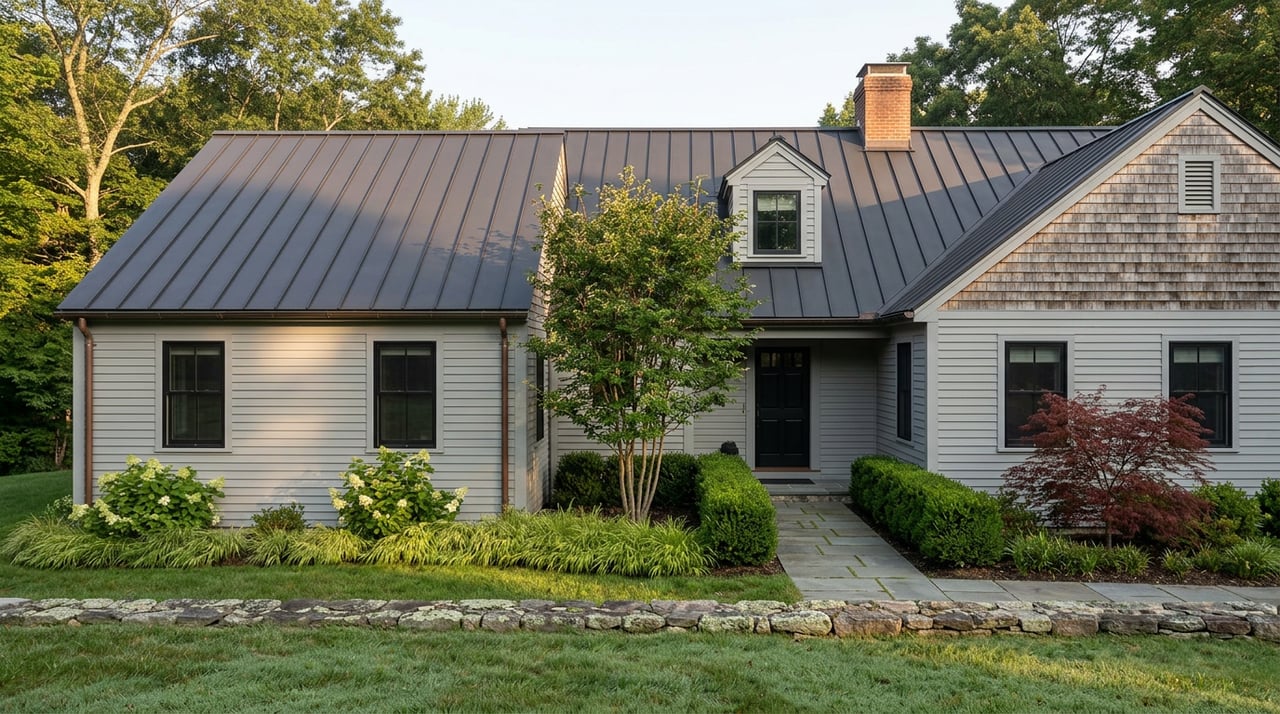
A buyer touring a colonial on Fisher Hill this month is likely to hear some version of the same reassurance from a well-meaning source: relax, Brookline just rezoned for thousands of new units, more supply is coming, prices will ease. It sounds like sound advice. It is also almost entirely beside the point for that particular buyer, because the rezoning in question never touched the zoning category their house sits in, and the units it does apply to are arriving at a pace measured in years, not months.
That gap between the headline and the mechanism is the story worth understanding before you decide whether to buy now or wait.
The Zoning Story Everyone Half-Remembers
In November 2023, Brookline's Town Meeting passed a rezoning plan by a lopsided vote of 207 to 33, with seven abstentions, to comply with the state's MBTA Communities Act. The law requires transit-served cities and towns to allow multifamily housing as of right in at least one district near a station. For Brookline, that meant zoning a minimum of 41 acres within a half mile of the T with capacity for 6,990 housing units on paper.
The centerpiece was Harvard Street, the town's main commercial corridor, where planners at the time estimated the rezoning could eventually produce up to 800 new units. Add in changes to existing multifamily districts and a Brookline Housing Authority site on Walnut and High Streets, and the full package was projected to create capacity for roughly 1,540 units townwide.
Capacity is the operative word. The law never required anyone to actually build anything. It only required the town to make building legal.
Three Units, Not Eight Hundred
As of February 2026, brookline.news reported that only three units had actually been proposed under the new Harvard Street zoning. Not permitted. Not under construction. Proposed.
The most visible project on the corridor tells you why the gap is so wide. A development originally pitched for Pleasant Street went to Brookline's Spring 2026 Town Meeting, then the developer asked to hold the article rather than push for a vote. By July, the plan had been scaled down to 96 apartments, now scheduled for the Fall 2026 Town Meeting with a warrant deadline of noon on September 3.
That is the pace of new housing on Brookline's rezoned corridor right now: measured in Town Meeting cycles, and the unit count goes down before it goes up.
The town's own leaders anticipated the tension between more housing and preserving what makes Harvard Street work as a commercial strip. Select Board member Paul Warren put it plainly when the plan was still being negotiated:
"It's not intended to harm the commercial vitality of communities like Brookline."
That balancing act, protecting first-floor retail while allowing housing above it, is part of why the zoning was written to move carefully rather than quickly.
Why the Timeline Keeps Stretching
Even the most advanced project born from this rezoning underscores the lag. The Waldo-Durgin site took seven years from zoning approval to breaking ground on demolition, with vertical construction still pending. Seven years is not an outlier delay. It is closer to the realistic timeline for a Harvard Street parcel to go from legal capacity to a finished building.
Part of the reason is physical. Much of Harvard Street is a patchwork of small parcels with existing tenants, which makes assembling a buildable site slower and more expensive than it would be in a town with larger, contiguous lots.
Part of it is regulatory, and it just got a little slower. On July 9, 2026, the governor signed the state's fiscal year 2027 budget, which extended zoning permit protections from 12 to 24 months. That change gives developers more runway to sit on an approved permit without losing it if local zoning shifts again. It is a reasonable accommodation for anyone financing a project in a high-rate environment. It is also one more reason the gap between a zoning headline and a finished building is not shrinking.
Two Brookline Markets, One Zoning Change
Here is the detail that matters most if you are comparing a Fisher Hill single-family to a Coolidge Corner condo: the Harvard Street rezoning targets a commercial corridor for multifamily buildings. Brookline's single-family stock, concentrated in neighborhoods like Fisher Hill and South Brookline, sits in a separate zoning category and a separate part of town entirely. None of the capacity created by this rezoning applies there.
That distinction shows up in the 2025 sales data. The median single-family home in Brookline sold for $2,675,000 in 2025, a 15 percent increase over 2024, while the average climbed to $2,935,296 across 121 sales, 13 more than closed in all of 2024 and enough to break a three-year streak of declines. The median condo sold for $940,000 in 2025, up 8.2 percent, with the average reaching an all-time high of $1,173,615.
Fiscal year 2026 assessed values moved in the same direction regardless of what was happening at Town Meeting: the average single-family assessment rose to $2,844,212, up 2.25 percent, and the average condo assessment rose to $988,113, up 2.8 percent. Assessments lag the market, but they are one more signal that price growth in Brookline has continued through the exact years the rezoning was supposed to be loosening supply.
What This Means If You're Deciding Whether to Wait
If you are shopping single-family in Fisher Hill or South Brookline, the rezoning conversation is not about your segment of the market at all. There is no pipeline of new single-family supply coming from this law, because the law was never written to create one there. Waiting for the Harvard Street project to change what you are competing against in a single-family search is waiting for something that was never going to happen.
If you are shopping condos, there is a real pipeline, but it is a slow one. The most advanced project on the corridor needed seven years to reach groundbreaking. The most recently proposed project just shrank to 96 units and still needs to clear a Town Meeting vote in the fall. A buyer hoping new Harvard Street inventory will change their negotiating position this year, or plausibly even in the next two, is pricing in a supply wave that the town's own timeline does not support yet.
There is a political dimension worth understanding too, since it explains why the pace stays slow even when the intent is genuine. Brookline is a town where 52 percent of households are renters, yet homeowners hold the overwhelming majority of seats at Town Meeting, and members are on average roughly 20 years older than the median Brookline adult. That composition does not mean the town opposes new housing. It does help explain why proposals move through negotiation and compromise rather than fast approval, and why a plan can pass 207 to 33 and still take years to produce three units on the ground.
Common Questions
Does the Harvard Street rezoning affect single-family home prices in Fisher Hill or South Brookline? Not directly. The rezoning applies to a commercial corridor zoned for multifamily buildings. Single-family neighborhoods sit in a separate zoning category that this law did not change.
How soon could new condo units from this rezoning actually reach the market? Based on the timeline so far, plan on years rather than months. The most advanced project took seven years from zoning approval to breaking ground, and the next project in line is still working through a Town Meeting vote scheduled for this fall.
Should I hold off on buying a condo in Brookline in case prices soften once these projects are built? The evidence points the other way. Prices and assessed values have both continued rising through the years this rezoning has been in effect, and the pipeline producing new units is measured in a small handful so far, not the hundreds originally projected.
If you are trying to figure out what a specific Brookline street or zoning district actually means for your search, that is a conversation worth having before you write an offer, not after. Orit Aviv works Brookline block by block, and can walk you through what is realistically changing here and what isn't. Let's Connect.
